Vertical Biosphere
Looking at Singapore's Oasia Hotel and other towers with plants built into their design made me curious about what the greenery could actually do for a building. Towers can use a lot of energy, and living high above the street can leave people feeling far from nature.
Project background
I wanted to explore whether plants, passive cooling, renewable energy and water collection could help address both problems at once. That question led me to Vertical Biosphere: a tower that operates more like a living environmental system than a sealed envelope.
Project description
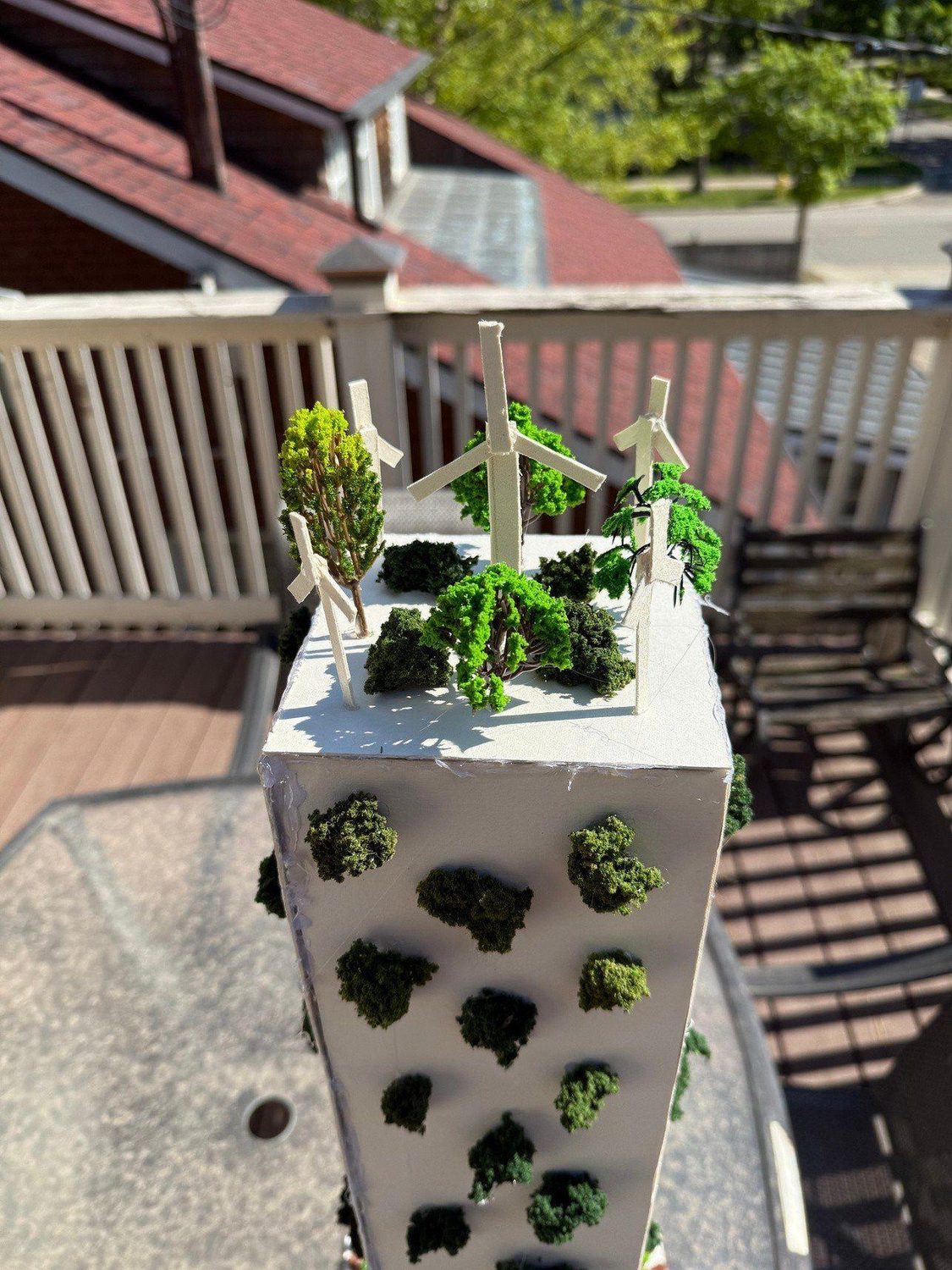
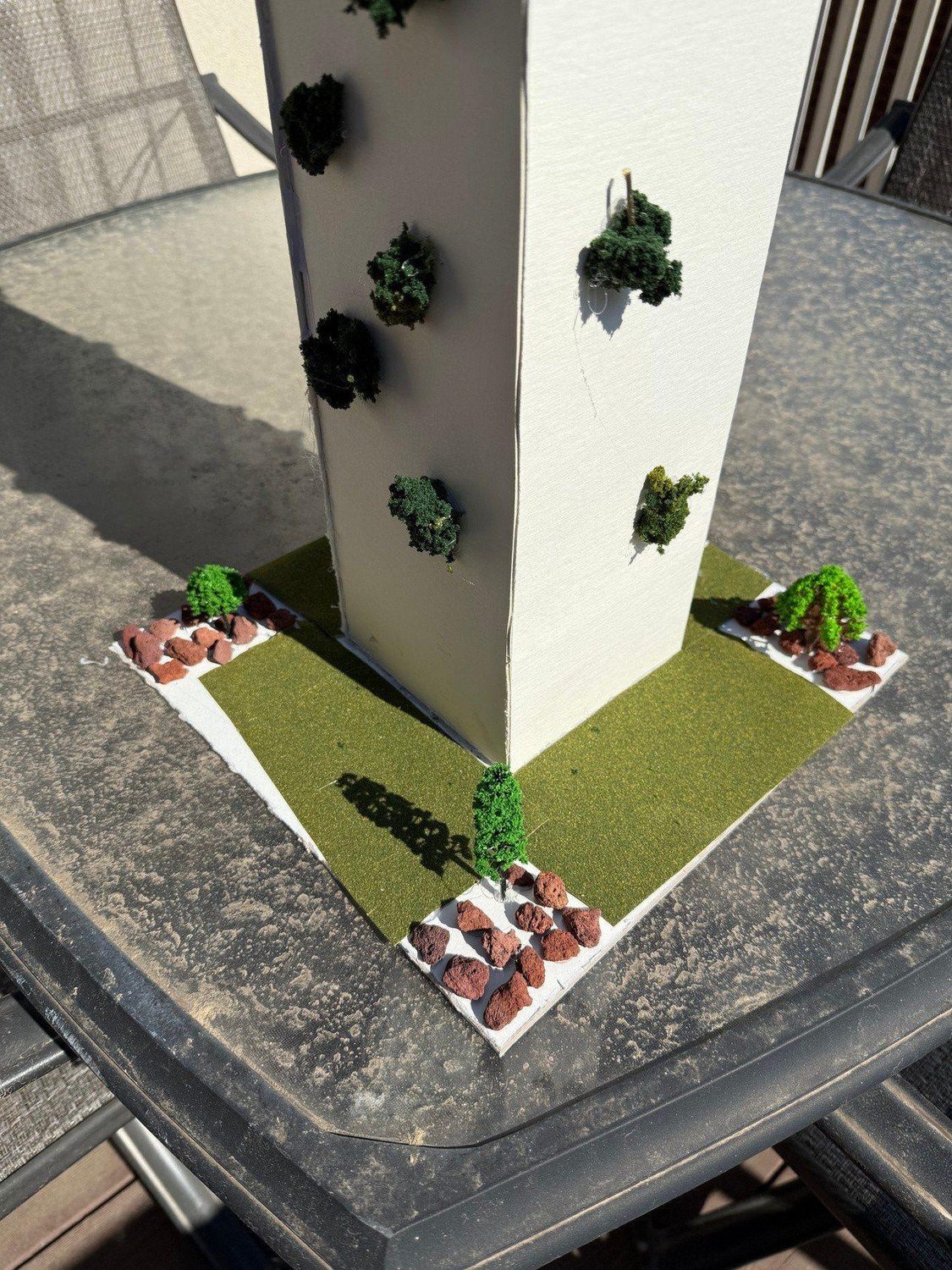
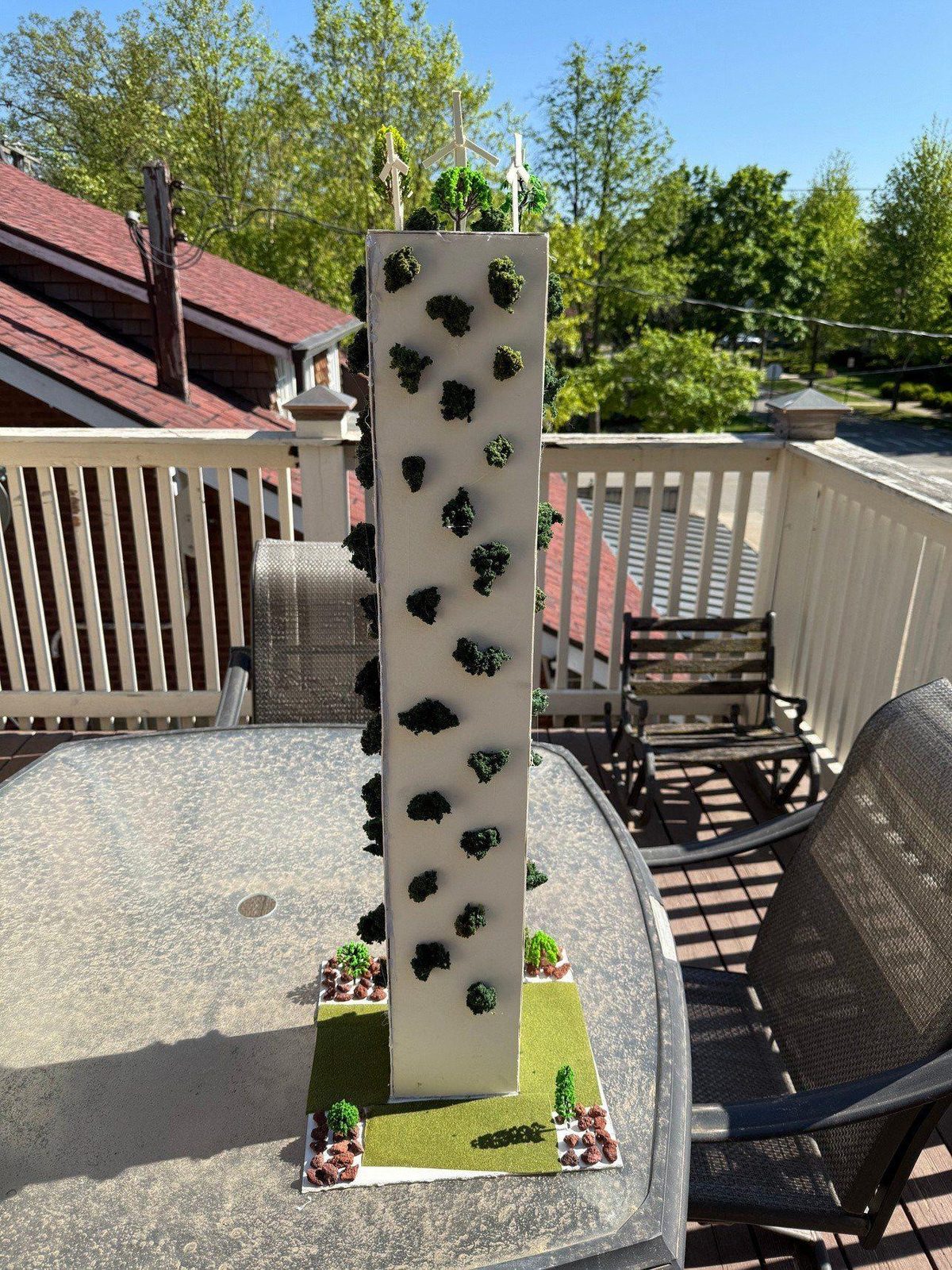
Vertical Biosphere is a self-sustaining tower wrapped in a dense green envelope that supports natural cooling, shading and air filtration. The roof functions as an infrastructure hub, integrating rainwater collection, photovoltaic panels and micro-wind turbines to reduce dependence on external energy systems. By combining active renewable technologies with passive environmental strategies, the project imagines the skyscraper as both architecture and climate-responsive landscape.
How can a skyscraper reduce its environmental impact and reconnect dense urban living with nature through façade design, renewable systems and passive climate strategies?
Research & analysis
- 01Biophilic high-rise precedents, including Singapore's Oasia Hotel
- 02Green façade systems and vertical vegetation strategies
- 03Passive cooling, shading and natural ventilation concepts
- 04Renewable energy integration — photovoltaic panels and micro-wind turbines
- 05Rainwater collection and environmental self-sufficiency studies
Design objectives
- 01Use vegetation as shading, cooling and air-filtering infrastructure
- 02Combine solar, wind and rainwater systems into the tower design
- 03Reduce energy dependence through passive environmental strategies
- 04Transform the façade into a living ecological surface
- 05Reimagine the high-rise as both building and climate-responsive landscape
The tower in three views